Welcome to the Mellow Madness update, a space for thinking out loud about strategy, leadership, and the lessons business sometimes teaches us when we least expect them.
Why good communication starts with understanding what the business is trying to achieve.
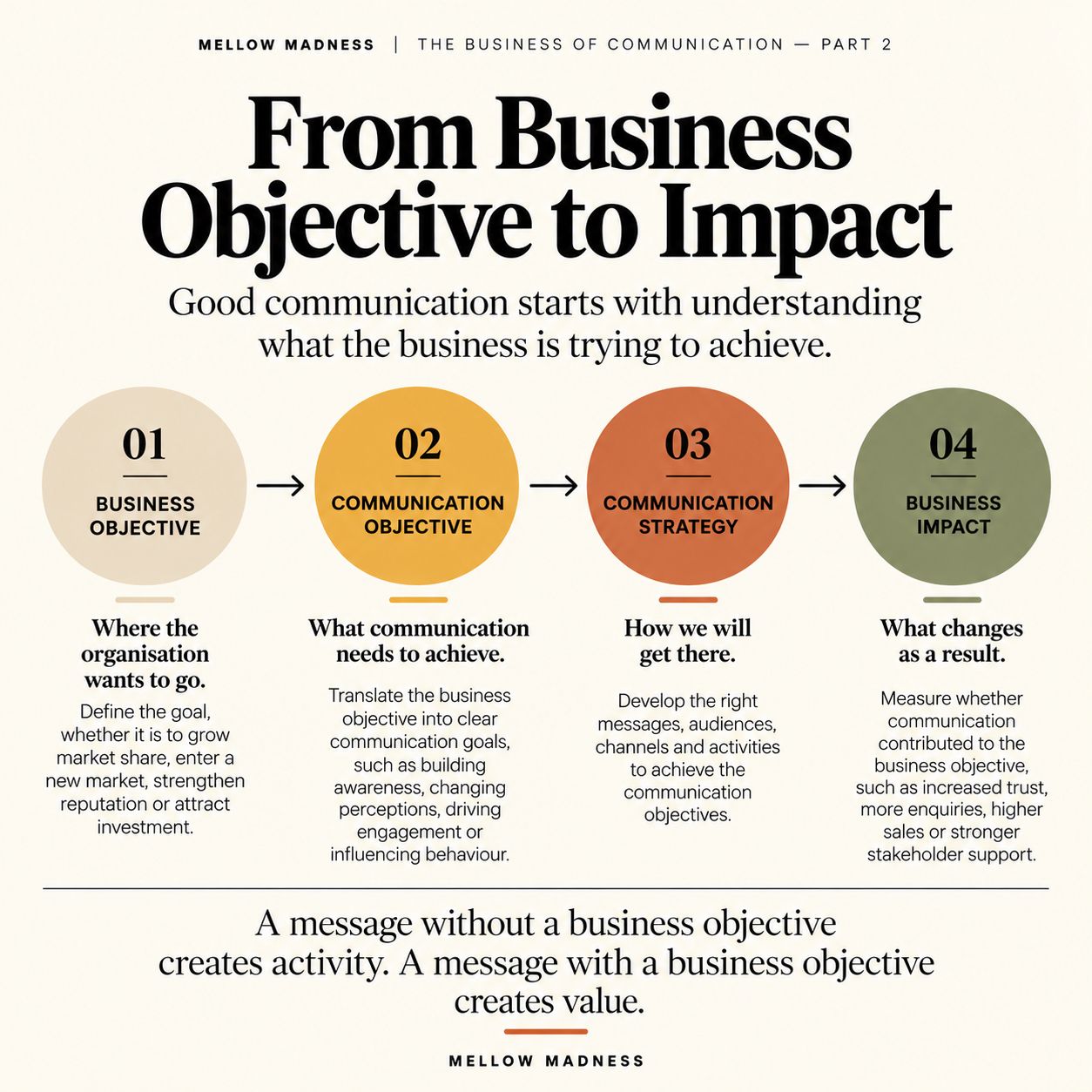
One of the things I have learnt over the years is that businesses are sometimes very clear about what they want to communicate, but not always clear about what they want that communication to achieve. A company wants a new campaign, a stronger social media presence, more publicity or perhaps a refreshed brand identity. These are all reasonable requests, but before we start discussing creative concepts, messaging or communication channels, I believe there is a more important question we should ask: What is the business trying to achieve?
Having spent more than two decades working across brand strategy, brand development, strategic and executive communications, and advertising, I have come to appreciate that some of the most valuable conversations happen before any creative work begins. They happen when we challenge the brief, question assumptions and try to understand the business problem behind the communication request.
Imagine a company approaches you because its sales are declining. Management believes the solution is a major advertising campaign. But what if customers already know the brand? What if the real problem is poor service, inconsistent product quality or a competitor offering better value? Increasing advertising might bring more people through the door, but it will not necessarily solve the underlying problem. In fact, it could make matters worse by attracting more customers to an experience that is already disappointing.
This is why I have always believed that communication should be driven by business objectives, not simply by the desire to be seen or heard.
Business strategy and communication are closely connected, but they serve different purposes. Business strategy determines where an organisation
wants to go, how it intends to compete and what success should look like. Communication helps translate that direction into messages that employees, customers, investors and other stakeholders can understand and act upon. My interest has increasingly been in that space between the two, where business ambitions must become meaningful communication.