Welcome to the Mellow Madness update, a space for thinking out loud about strategy, leadership, and the lessons business sometimes teaches us when we least expect them.
Have you ever noticed how the same story can be told differently depending on who is listening? Growing up in Africa, many of us experienced this through storytelling. An elder could tell a story to children, then use that very same story to make a point among adults. The characters and central lesson remained the same, but the language, emphasis and delivery changed. The storyteller understood something that organisations sometimes forget: knowing your audience is just as important as knowing your message.
The same principle applies to business communication.
An organisation communicates with many different audiences, often at the same time. Employees want to understand where the business is going and what it means for their future. Customers want to know why they should trust the brand. Investors are interested in performance, growth and risk. Regulators want assurance that the organisation is responsible and compliant. The challenge is that while these audiences have different interests, they are all engaging with the same organisation.
So how do we communicate differently without becoming inconsistent?
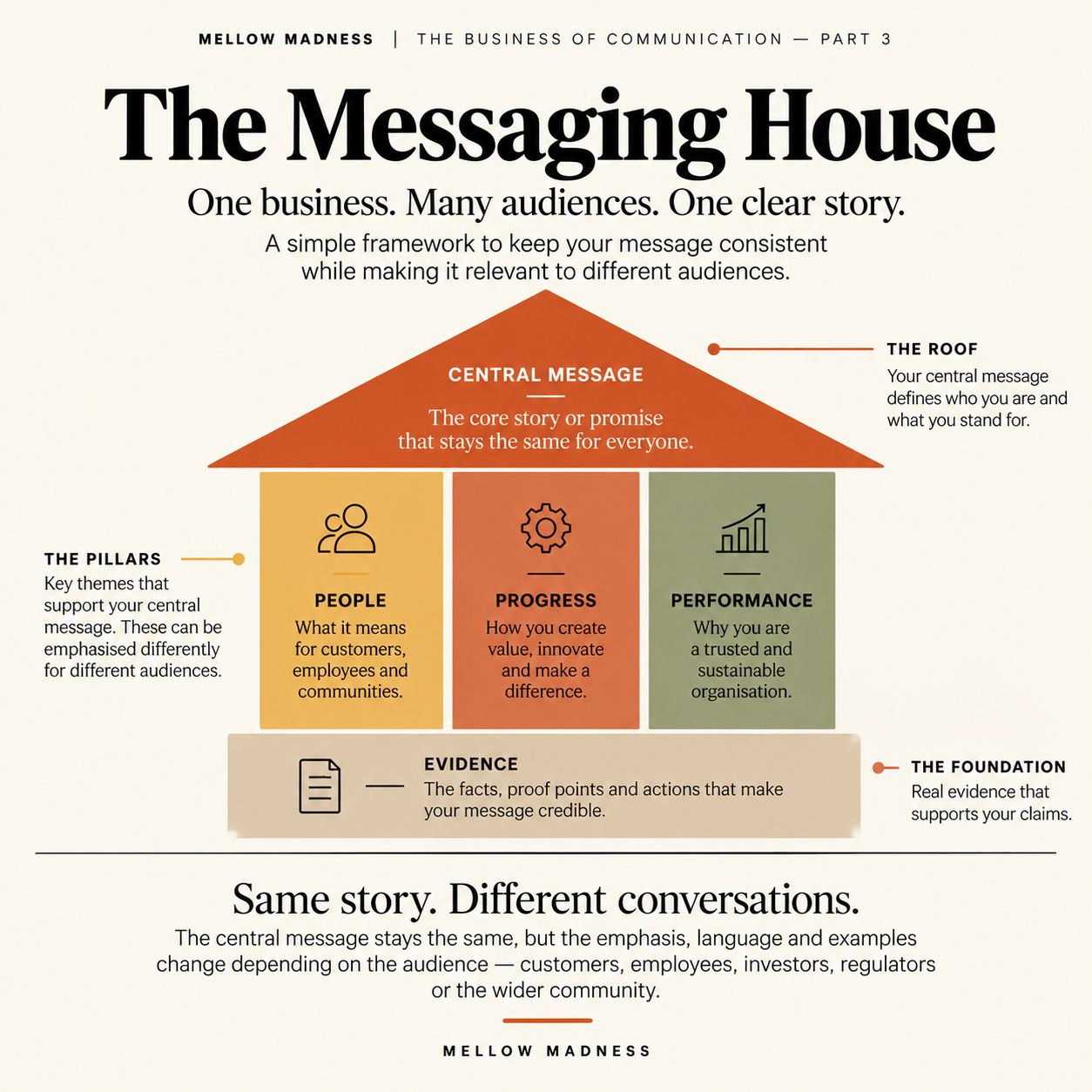
One useful framework in strategic communications is the messaging house. Think of it as a simple structure that helps an organisation organise what it wants to say. The roof represents the central message or overarching promise. The pillars represent the key themes supporting that message, while the foundation contains the facts, evidence and actions that make those claims credible.
Imagine an African company introducing a new digital financial service. Its central message might be that it is making financial services more accessible. For customers, the emphasis could be on convenience, affordability and security. For investors, the conversation might focus on market opportunity, scalability and sustainable growth. Regulators would be more interested in compliance, consumer protection and financial inclusion. Employees, meanwhile, need to understand how their work contributes to the company’s ambition.
The language changes, but the central story remains consistent.
This is where messaging becomes more than simply writing attractive statements. A well-developed messaging framework helps organisations connect their business objectives to the concerns of the people they need to reach. It also creates alignment across leadership, marketing, public relations, internal communications and customer-facing teams. Without that alignment, different departments can unintentionally tell different stories about the same business.