It Takes a Village to Build a Dream
|
Welcome to the Mellow Madness update, a space for thinking out loud about strategy, leadership, and the lessons business sometimes teaches us when we least expect them.
There is an African proverb most of us have heard countless times: it takes a village to raise a child. I have been thinking lately that perhaps the same is true of our dreams. We like to tell stories about ambition as though they belong entirely to the person whose name eventually appears on the business, qualification, book or award. We talk about the entrepreneur who risked everything, the student who sacrificed to get an education, the artist who
refused to give up and the leader who worked their way to the top. These
stories are important, but they are rarely complete. Behind almost every
person pursuing something difficult is a small village of people who,
knowingly or unknowingly, are helping to carry that dream.
I began thinking about this after reflecting on my own decision to pursue an MBA. For almost two years, I sacrificed a significant portion of my income to
pay for my studies. I have always thought of that period as one of the biggest bets I made on myself, and it was. But the more I think about it, the more I realise that describing it as my sacrifice tells only part of the story. I had children. I had a household. I had responsibilities. Money directed towards my education was money that was no longer available for something else at home. My wife supported the decision, but her support did not make the sacrifice disappear. It meant she was willing to carry part of it with me.
That is the part we sometimes leave out when telling stories about success.
Ambition has a cost, and the ambitious person is not always the only one paying it. The people around us may never receive an invoice, but they contribute in other currencies: patience, time, inconvenience, encouragement, introductions, emotional support and, sometimes, simply accepting our absence. The entrepreneur working late is sacrificing sleep, but somebody may also be sleeping alone. The executive studying after work is investing in a qualification, but the family may be reorganising itself around that commitment. The strategist travelling for work may be doing important work for a client, but somewhere else there are children counting the days until a parent comes home.
|
 |
I know that last one personally. There are assignments that take me away from home for long periods, sometimes as much as 90 days in another country, working deeply inside a business to understand it and help shape its business or brand strategy. I value that work enormously. It has taken decades of experience to become someone organisations trust with those kinds of problems, and I do not take that trust lightly. But professional value has a personal cost that does not appear on an invoice. While I may be in another country helping an organisation think through its future, my family is living through my absence in the present.
That has made the sentence “We forget the children who accepted that a parent was busy again” particularly uncomfortable for me. Children do not necessarily understand strategy assignments, deadlines, client pressures, or why an opportunity matters professionally. They simply understand that Dad is away.
And yet, in their own quiet way, they become part of the infrastructure that allows the work to happen. They adjust. They wait. They learn that the phone sometimes has to substitute for presence. That does not mean we should romanticise absence or use ambition to excuse neglect. It means those of us pursuing demanding careers should be honest enough to recognise that some of our achievements have been made possible by sacrifices other people did not choose as enthusiastically as we did.
Recognising this does not diminish individual effort. There are examinations nobody can write for you, businesses nobody can build for you and difficult decisions nobody can make on your behalf. Personal responsibility, discipline and courage still matter. But acknowledging the village does not make the individual smaller; it makes the story more truthful. You can be proud of what you built while still remembering who helped carry the bricks.
When I look back at different chapters of my life, I can see villages everywhere. Back in my music days, there was the band. A band is perhaps one of the simplest examples of collective belief. Before there is an audience, everybody
has to agree that the music is worth making. People contribute talent, equipment, rehearsal time, transport, contacts and energy to something whose future is uncertain. Later, business taught me the same lesson differently. I have built businesses with partners who were prepared to believe in an idea before there was enough evidence to make belief comfortable. Anyone can become excited when the customers arrive. The special people are those who can sit around a table when something is still mostly an idea and decide to build it with you.
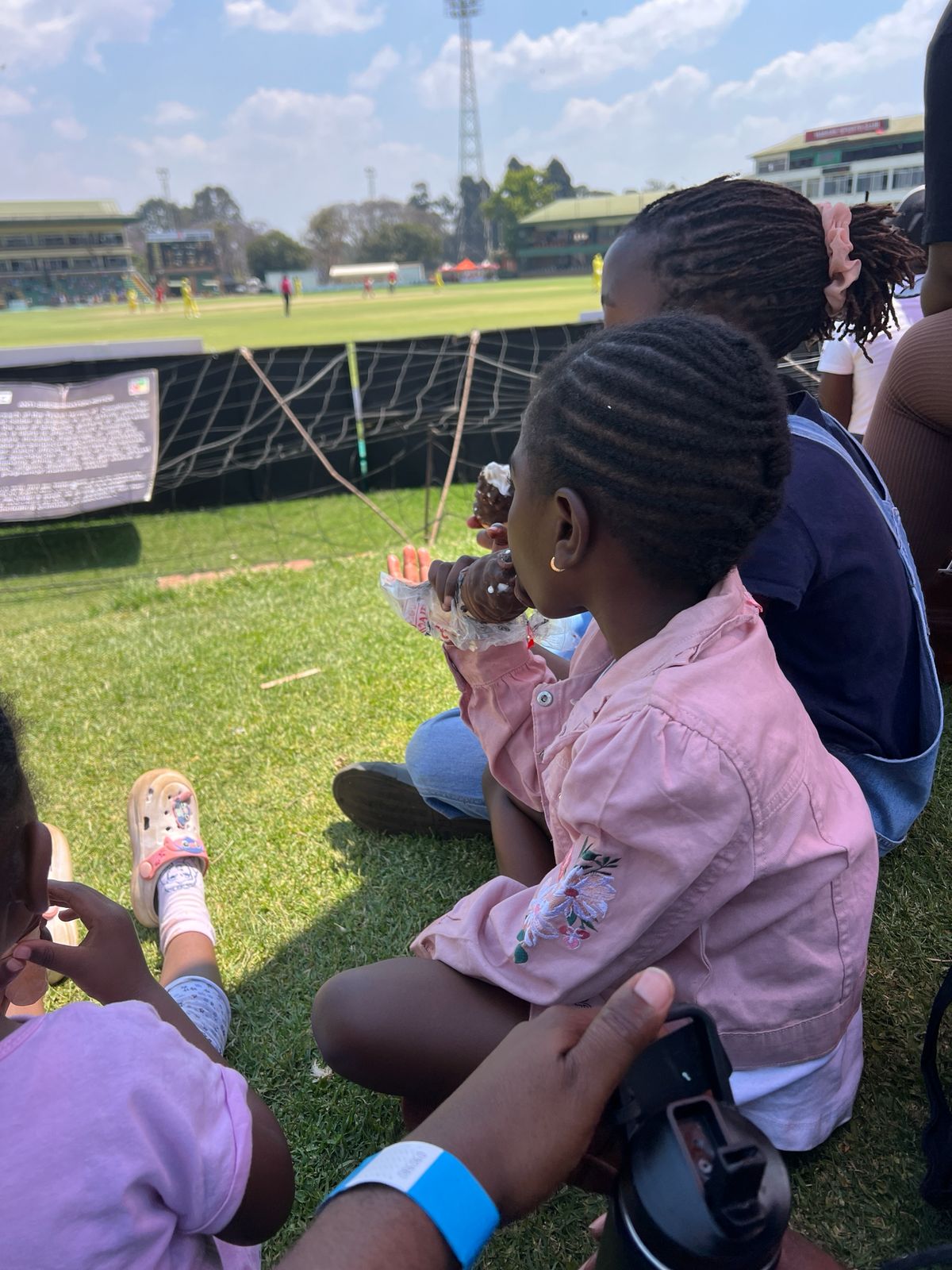
My book, 45 Lessons From My Father, may be one of the most literal examples of a village inside something that carries my name. The lessons themselves begin with my father. I chose to write and self-publish them because I believed that the wisdom he gave me could be useful beyond our family. But even the physical character of the book carries other hands. Some of the illustrations came from my daughter Mandipa, Tatita. The colourful writing and drawing in the book are entirely hers, created when she was only seven years old. My wife also influenced its direction, encouraging me to keep the book simple and to use a restrained, largely one-colour approach inspired by some of the books she loved.
So when somebody holds 45 Lessons From My Father, they may see my name on the cover, but I see generations. I see my father passing lessons to me. I see my seven-year-old daughter’s hand making marks that became part of a published book. I see my wife’s eye helping shape its simplicity. I see myself trying to bring all those pieces together and send them into the world. Perhaps that is what creation often is: one person’s name becomes the convenient label for something that carries the fingerprints of many people.
|
 |
This feels particularly familiar to us as Africans. The idea of the completely self-made person has always sat somewhat awkwardly beside cultures in which progress has traditionally been communal. Long before networking became a business strategy, somebody knew somebody who could help. Someone looked after the children while another person worked. Someone provided somewhere to stay when a young person moved to the city. Someone paid school fees. Someone recommended someone for a job. Someone shared food, advice, contacts or simply encouragement. The individual moved forward, but there
was often a community quietly making that movement possible.
The village around a dream does not always understand the dream, and perhaps it does not need to. We sometimes become frustrated when the people closest
to us cannot see what we see. But the dream lives inside our imagination, not theirs. A spouse can support your ambition without understanding every part
of your strategy. Your children can love you without caring about your five-year plan. A friend can encourage you without sharing your obsession. Sometimes
the village’s greatest contribution is simply creating enough room for you to continue pursuing something they cannot yet see.
The danger comes when the dream begins to work. Success has a way of
cleaning up the story. The difficult years become a paragraph in a biography. The qualification appears after your name. The business gets a polished
website. The book appears on Amazon. The international assignments become impressive lines on a profile. People see the outcome and congratulate the person standing at the centre of it.
But success has terrible editing skills.
We forget the wife who said, “We will make it work.” We forget the children who accepted that a parent was busy again. We forget the partner who took the early risk, the friend who made the introduction, the colleague who covered the gap, the mentor who challenged our thinking and the person who believed in us before believing in us became easy.
Their names may never appear on the certificate, company registration documents or client invoice, but their contribution remains part of the architecture of what was built.
I think maturity requires us to remember them. Not performatively, and not by pretending our own hard work did not matter, but by understanding that gratitude and ambition can occupy the same space. There is no contradiction in saying, “I worked incredibly hard for this,” and also saying, “I could not have done it entirely alone.” Perhaps the strongest people are not those who insist they are self-made, but those secure enough in their own contribution to acknowledge everyone else’s.
|
 |
|
|
There is also a responsibility that comes with recognising the village. At some point, if people helped carry our dreams, we should become part of the village carrying somebody else’s. Make the introduction. Share what you know. Recommend the small business. Buy the friend’s book. Give the younger person an opportunity. Mentor somebody. Sometimes the contribution that changes another person’s life will seem insignificant to you.
We spend a great deal of time asking who believes in our dreams. Perhaps, as we grow, we should also ask whose dreams we are helping to build.
I still believe deeply in betting on yourself. Nobody can want your future more than you do, and nobody should be expected to invest more heavily in your dream than you are willing to invest yourself. But self-belief should never become self-importance. When the bet begins to pay off, it is worth looking around and remembering everyone who quietly put something on the table with you.
Because very few dreams are truly built by one pair of hands. Somebody carried a brick. Somebody held the ladder. Somebody opened a door. Somebody kept things going while you were away. Somebody gave you an idea. Somebody told you to keep going when stopping would have been easier.
It takes a village to raise a child.
Perhaps it takes a village to build a dream.
Thank you for reading,
Warm regards.
|
|
|
|
|
If someone forwarded this note to you and you’d like to receive future issues, you can subscribe here:
|
|
|
|
|
|
|

