This week, my thoughts are with every African living in fear because of xenophobic tensions in South Africa. They are with Zimbabweans, Mozambicans, Malawians, Congolese, Ethiopians, Nigerians, Somalis and
many others who have spent recent days wondering whether the place they
call home will still welcome them tomorrow.
They are also with South Africans who are frustrated by unemployment, inequality and the daily struggle to build better lives for their families. Fear
has a way of convincing people that someone nearby must be responsible for problems whose roots run much deeper.
It is during moments like these that I find myself thinking about Hugh Masekela.
Not simply because he was one of Africa’s greatest musicians, but because he was one of Africa’s greatest witnesses. Through music, he documented a continent many of us have forgotten. An Africa of movement, labour, sacrifice, longing and shared destiny.
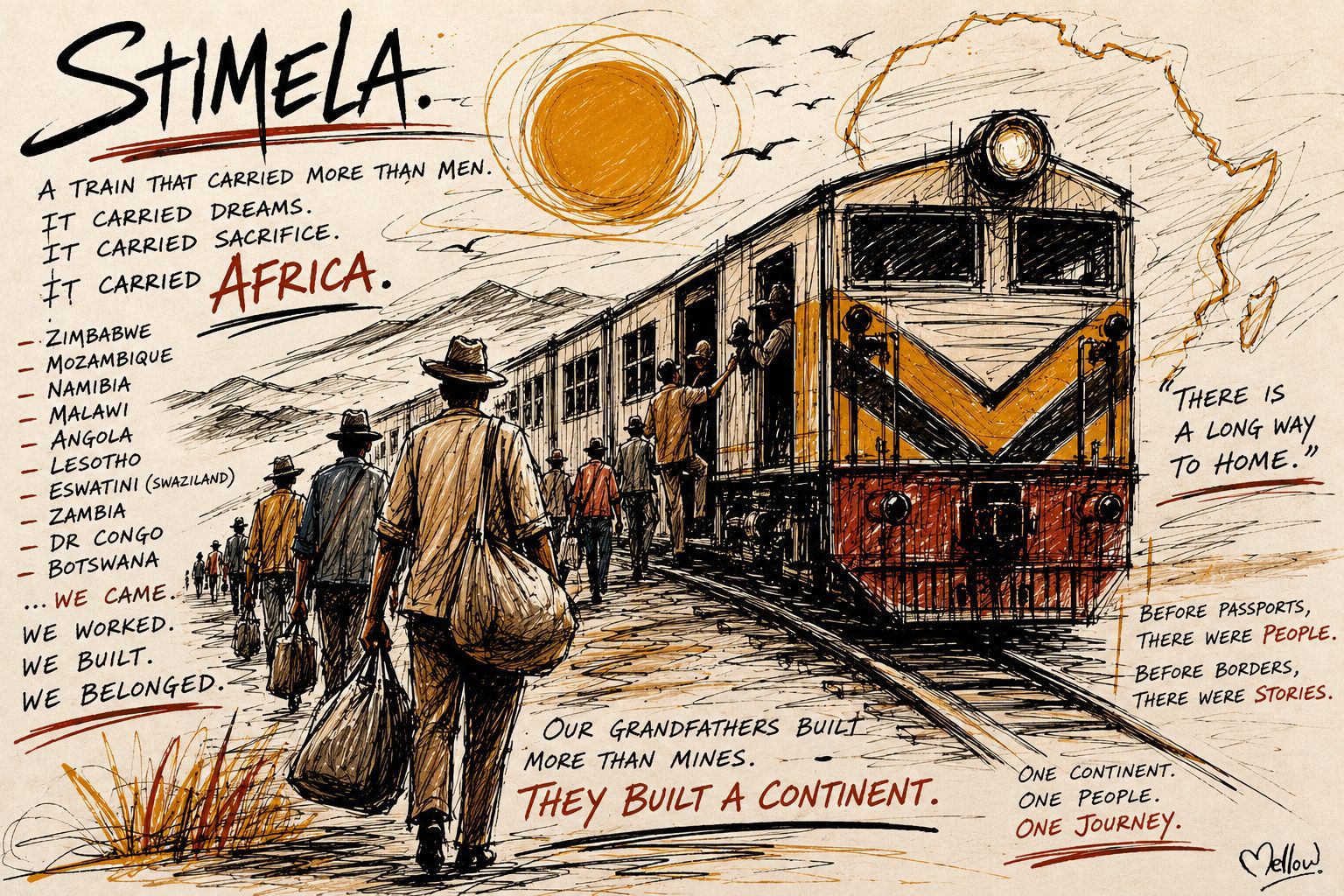
His masterpiece Stimela tells the story of a train carrying African men to South Africa’s mines from across the continent. They came from lands we now call Zimbabwe, Mozambique, Malawi, Lesotho, Zambia and beyond, leaving
families behind in search of work that would help build lives both at home and in the country that needed their labour.
When I listen to Stimela, I do not just hear a song. I hear our grandfather’s generation. I think of the countless African men who climbed onto those trains, leaving wives, children and parents behind in search of work.
They descended into some of the world’s deepest and most difficult mines,
often under conditions that asked too much of the human body and spirit.
Many returned home changed. Some never returned at all. Yet their labour, sacrifice and dignity helped build one of Africa’s largest economies.